Global Fund Reallocation: Hong Kong Stock Valuation Advantage Stands Out
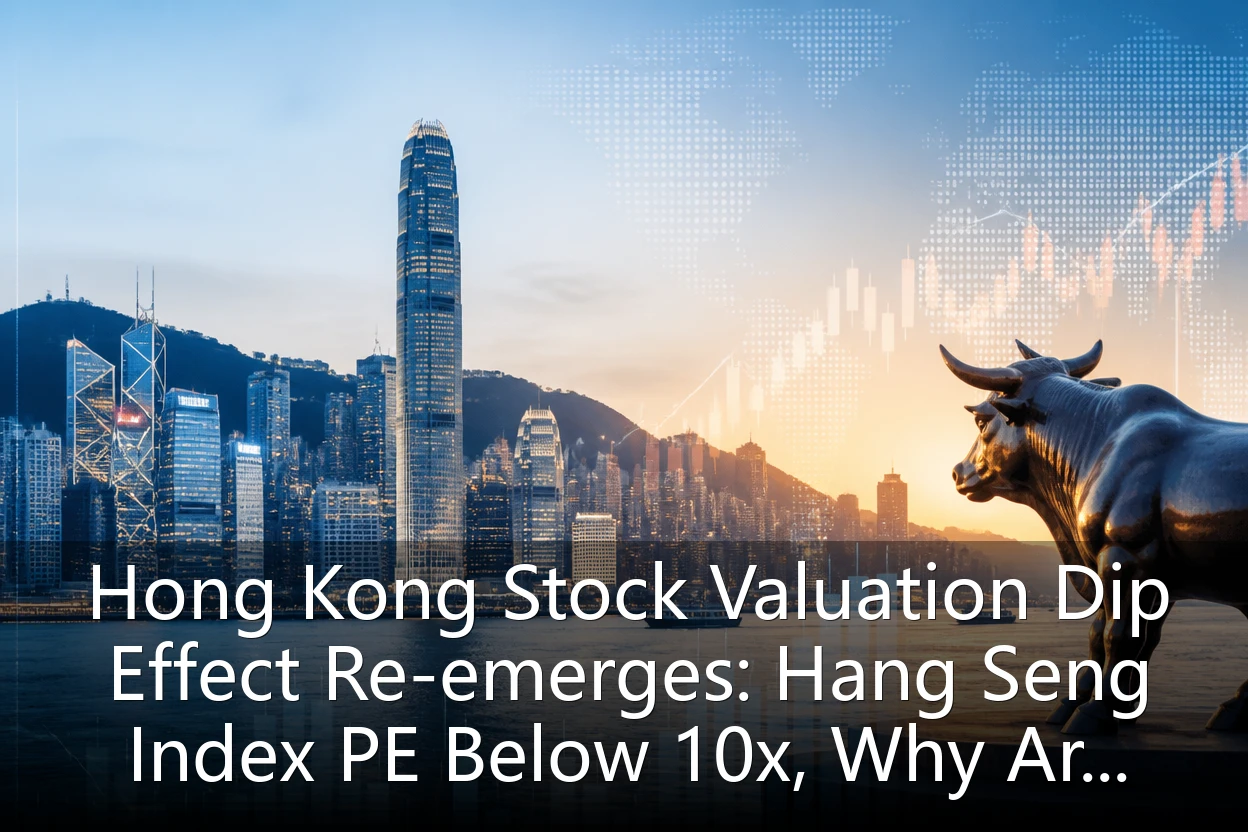
Entering August 2026, global capital markets showed significant divergence after sharp first-half volatility. US stocks hovered at high levels on the tailwinds of the AI wave, while the Hong Kong market quietly entered a highly attractive valuation range under intertwined factors. As of the latest trading data on August 2, the Hang Seng Index's overall P/E ratio had fallen to approximately 9.8x, at a historically low percentile over the past decade. This figure is not only far below the S&P 500's 22x+ P/E ratio but also shows rare cost-effectiveness compared to major emerging market indices.
For mainland investors, this round of Hong Kong stock valuation reshaping is not simply a venting of market pessimism but a superposition of multiple structural dividends. Through fund flow and policy analysis, Gang Gu Chuan found that Hong Kong stocks are currently at an allocation window driven by both a "valuation trough" and "quality asset supply."
Formation Logic of the Valuation Trough: From Liquidity Disturbance to Fundamental Support
The decline in Hong Kong stock valuations this round first stems from global liquidity disturbances. Although Fed Chair Warsh's recent post-meeting remarks downplayed forward guidance, market expectations for further rate hikes in 2026 have not fully dissipated. The phased strengthening of the US Dollar Index has broadly pressured emerging markets, with Hong Kong stocks, as an offshore market, bearing the brunt. However, unlike past rounds of foreign capital withdrawal, the current Hong Kong stock downturn is not driven by deteriorating fundamentals.
In fact, earnings expectations for Hang Seng Index constituents showed a mild upward revision in the first half of 2026. Leading internet companies significantly improved their income statements after cost reduction and efficiency gains, while high-dividend state-owned enterprise sectors provided solid cash flow support in energy and finance. This divergence of 'killing valuation but not earnings' is precisely the golden pit long-term value investors anticipate. From real-time Hong Kong stock market data, after the Hang Seng Index fell below key round-number levels, trading volume did not show panic-driven expansion but rather a pattern of bottom-level contraction and consolidation, suggesting that bearish forces are nearing exhaustion.
Southbound Funds' Counter-Cyclical Buying: Why Do Domestic Investors Favor Hong Kong Stocks?
While Hong Kong's low valuation attracts global attention, southbound funds are playing the role of a 'ballast stone.' Hong Gu Chuan's fund flow monitoring data shows that net southbound inflows in July 2026 hit a new year-to-date high, demonstrating domestic capital's firm confidence in Hong Kong stock allocation. The root of this confidence lies precisely in the irreplaceable trading instruments and institutional advantages of the Hong Kong stock market.
First, Hong Kong Stock Connect targets include many quality internet, biopharmaceutical, and new consumption leaders unavailable in the A-share market. With the ongoing homecoming wave of China concept stocks, Hong Kong has become the gathering place for China's new economy leaders. Second, although the AH premium index has recently narrowed, it remains at a historically high level, meaning the same company's Hong Kong shares trade at a significant discount to A-shares. For long-term value investors, buying Hong Kong Stock Connect targets is not just investing in the company itself but also enjoying the margin of safety brought by institutional dividends.
Trading Rules and Product Richness: Hong Kong Stocks Are Not Just 'Cheap'
Many domestic investors, when trading Hong Kong stocks, often focus only on low valuation, overlooking the market's richness in trading rules and derivative instruments. As a mature international market, Hong Kong's short-selling mechanism, T+0 intraday trading, and a wide variety of structured products provide diversified strategy space for investors with different risk appetites.
In volatile markets, Hong Kong stock investors can hedge risks through short selling or allocating inverse ETFs, which is currently difficult to achieve in the A-share market. Additionally, the Hong Kong market generally offers higher dividend yields; high-dividend stock portfolios within Hang Seng Index constituents often exceed 5%, providing scarce cash flow returns in a low-interest-rate environment. It is this flexible mechanism of 'offense when possible, defense when needed' that keeps Hong Kong stocks in an irreplaceable position in global capital allocation.
Risks and Opportunities Coexist: A Rational View on Hong Kong Stock Allocation
Despite the significant valuation advantage, Hong Gu Chuan also reminds investors that cross-border investment requires respect for market risks. Hong Kong stock liquidity is greatly influenced by the global macro environment; unexpected Fed policy pivots or geopolitical volatility can trigger sharp short-term swings. Moreover, individual stock differentiation in Hong Kong is extremely severe, and low-valuation traps are not uncommon, requiring investors to carefully discern companies' true earnings quality and cash flow conditions.
Overall, the Hong Kong stock market in August 2026 is at a stage where risks are fully exposed and the margin of safety is relatively high. For investors looking to diversify single-market risk and allocate to quality Chinese assets, the current valuation levels and fund flow directions of Hong Kong stocks have already sent relatively clear signals.