


hk-stock-live
Hong Kong Stock Agricultural Sector Volatility Resumes: Pig Price Rebound and Policy Benefits Coincide, Signals of Cyclical Reversal Gradually Appearing
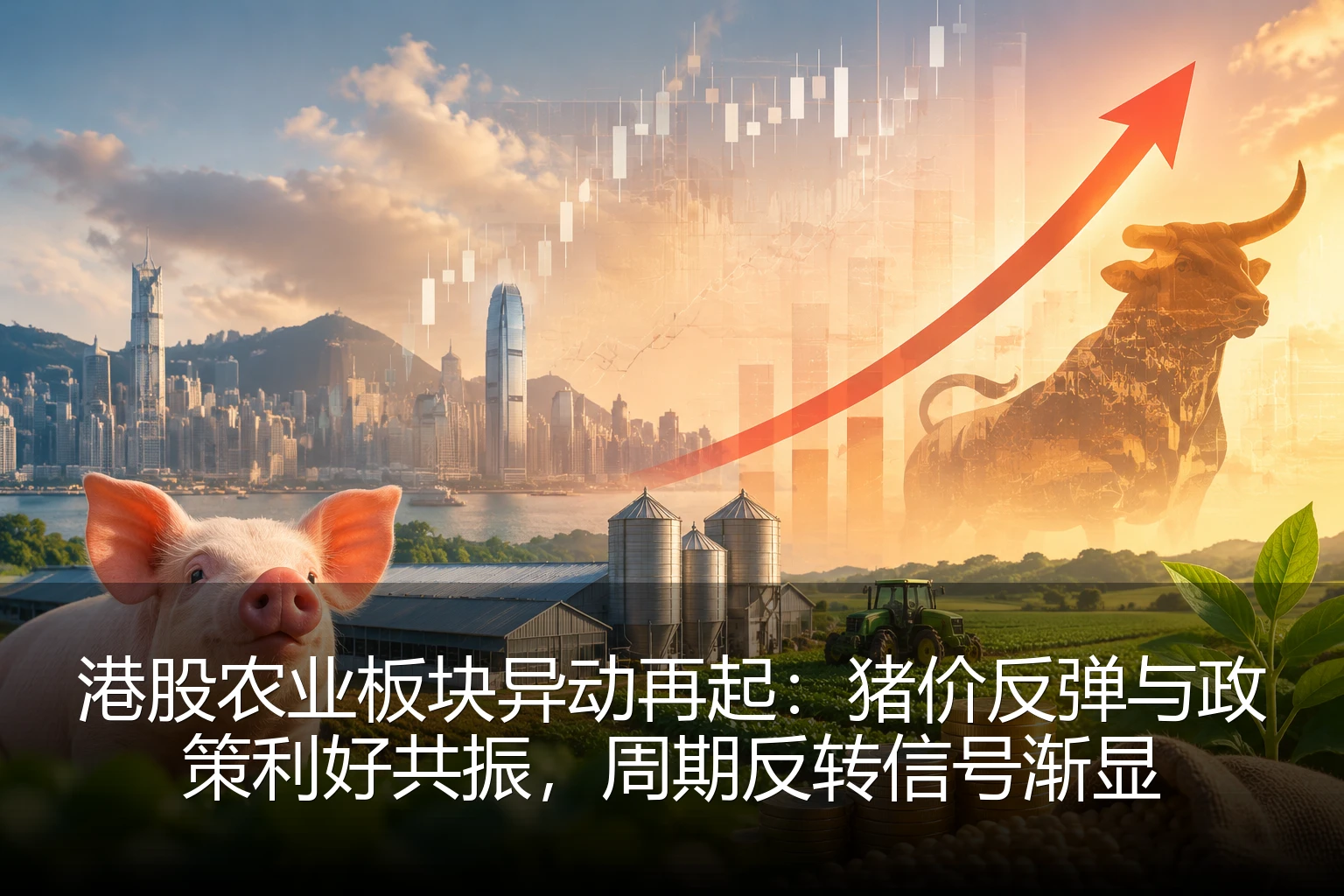
August 14, the Hong Kong agricultural sector continued its strength, with several agricultural stocks rising against the trend. Pig farming stocks led the surge, as the rebound in pork prices and policy benefits became the market focus. Looking at market performance, the agricultural sector rose more than 3% in the past week, significantly outperforming the Hang Seng Index, indicating the money's preference for the agricultural sector. Behind this movement, there are expectations of a pork price cycle reversal and support from policy benefits, while the attributes of low valuation and high dividend attracted capital inflow from the south.
## Pork Price Rebound: Signals of a Cyclical Reversal Emerging
Pork price trends are one of the core drivers of the agricultural sector. Recently, domestic pork prices have gradually recovered from their lows, with the national average pork price rising from 12 yuan per kilogram at the end of July to 14 yuan in mid-August, a rise of over 16%. This rebound is not accidental but reflects the stage of capacity divestment. According to data from the Ministry of Agriculture and Rural Affairs, the stocking volume of pigs in the first half of 2026 decreased by 8% year-on-year, with the stocking volume of laying sows decreasing by 10% year-on-year, indicating a capacity reduction exceeding market expectations. The contraction of capacity eases supply-side pressure, while demand gradually warms up as the economy recovers, suggesting that pork prices are likely to enter an uptrend.
From a cyclical perspective, the pig farming industry has a clear cyclical nature, typically one cycle every 3-4 years. In 2023-2024, pork prices were at the bottom of the cycle, and farming enterprises generally suffered losses with accelerated capacity divestment. In 2025, as capacity divestment is completed, pork prices will bottom out and start a cyclical uptrend in 2026. The current pork price rebound signals the emergence of a cyclical reversal, and the profitability of pig farming enterprises is expected to gradually improve.
For Hong Kong agricultural stocks, pig farming enterprises are a significant component. For example, a leading pig farming stock saw its price rise over 10% in the past week, mainly benefiting from expectations of a pork price rebound. This company suffered heavy losses in 2025, but with the rise in pork prices in the first half of 2026, losses narrowed, and the market expects profitability in the second half, thus supporting the stock price.
## Policy Benefits: Agricultural Support Policies Increase
Besides the pork price cycle reversal, policy benefits are another major driving factor for the agricultural sector's movement. Recently, the national level has introduced multiple policies supporting agricultural development, including subsidies for pig farming, agricultural technology innovation, and rural revitalization. For example, at the end of July, the Ministry of Agriculture and Rural Affairs issued a notice on further supporting the development of the pig farming industry, proposing increased subsidies for farming, providing subsidies to farming enterprises with stocking volumes exceeding a certain scale of laying sows, and relaxing environmental policies to allow farming enterprises to expand capacity.
Policy support not only targets pig farming but also covers the entire agricultural chain. For instance, support for agricultural technology innovation encourages enterprises to develop new breeds and new technologies to improve agricultural production efficiency; support for rural revitalization promotes the integration of agriculture with tourism and e-commerce, expanding profit channels for agricultural enterprises. These policy benefits provide long-term support for the agricultural sector and enhance market confidence in agricultural stocks.
Some companies in the Hong Kong agricultural sector benefit from policy support. For example, an agricultural technology company whose main business is agricultural technology innovation recently received policy subsidies, increased R&D investment, and a new product is about to launch, leading to market expectations of improved performance and a rise in stock price. Furthermore, policy integration of the agricultural chain has promoted mergers and restructuring of agricultural enterprises, such as an agricultural enterprise acquiring an upstream feed supplier to achieve industrial chain integration and improve profitability.
## Capital Flow: Southbound Capital Accelerates Layout in Agricultural Sector Southbound capital is a major force in the Hong Kong stock market, and its flow often reflects the market's outlook on specific sectors. Recently, southbound capital has accelerated its positioning in the agricultural sector, becoming another major driver of agricultural stock movements. According to Hang Seng Index data, net southbound capital inflow into the agricultural sector exceeded HKD 2 billion in the past week, with pig farming and agricultural technology stocks being key allocation targets.
Southbound capital favors the agricultural sector mainly based on two points: first, low valuation; the agricultural sector's current P/E ratio is about 8 times, lower than the Hang Seng Index's 10 times, and at a historical low; second, high dividends. Some agricultural enterprises, such as pig farming and agricultural product processing, have dividend yields exceeding 5%, offering good defensive characteristics. In the current global rate cut cycle, high-dividend assets are favored by capital, highlighting the high dividend attribute of the agricultural sector.
In addition, southbound capital also emphasizes the long-term growth potential of the agricultural sector. With population growth and upgrading consumer demand, the demand for agricultural products continues to increase, giving the agricultural sector long-term growth potential. For example, agricultural product processing enterprises benefit from upgrading consumer demand, increased product added value, and enhanced profitability; agricultural technology enterprises benefit from technological progress, improved production efficiency, reduced costs, and enhanced competitiveness.
## Industry Outlook: Investment Opportunities in a Cyclical Reversal
Overall, the Hong Kong stock agricultural sector is in the early stage of a cyclical reversal. With a rebound in pork prices and supportive policies coinciding, capital inflow is increasing, making investment opportunities worth paying attention. Looking at sub-sectors, pig farming, agricultural technology, and agricultural product processing are key directions.
In terms of pig farming, capacity divestment is entering a critical stage, and a rebound in pork prices is expected to continue, with the profitability of farming enterprises gradually improving. It is recommended to focus on pig farming enterprises with scale advantages and strong cost control capabilities, as these companies can gain greater profit margins during the rising pork price cycle.
In agricultural technology, policy support for technological innovation means that agricultural technology enterprises are expected to benefit from technological progress, increased production efficiency, and reduced costs. It is recommended to focus on companies with core technologies in agricultural technology innovation, such as breeding, agricultural machinery, and agricultural Internet of Things.
In agricultural product processing, upgrading consumer demand drives increased added value and enhanced profitability for agricultural product processing enterprises. It is recommended to focus on agricultural product processing enterprises with brand advantages and channel advantages, such as dairy and meat product processing.
Of course, investing in the agricultural sector also requires attention to risks. First is the risk of fluctuating pork prices, as pork prices are heavily influenced by supply and demand; if capacity divestment is below expectations, pork prices may fall again; second is the risk of policy changes, as the intensity of policy support may adjust, affecting corporate earnings; furthermore, natural disasters and epidemics may affect agricultural production, leading to performance fluctuations.
Overall, the Hong Kong stock agricultural sector is in the early stage of a cyclical reversal. With a rebound in pork prices and supportive policies coinciding, capital inflow is increasing, low valuation and high dividend attributes are prominent, making investment opportunities worth paying attention. Investors can focus on leading companies in sub-sectors to grasp the investment opportunities brought by the cyclical reversal.
The content on this website is for learning and communication purposes only. It does not provide financial services such as account opening, margin trading, discretionary asset management, or insider trading. Do not trust any private messages on the site that recommend stocks or guide trading operations.