Introduction: Global Liquidity Expectations Shift, Hong Kong Stocks Enter High-Volatility Game Phase
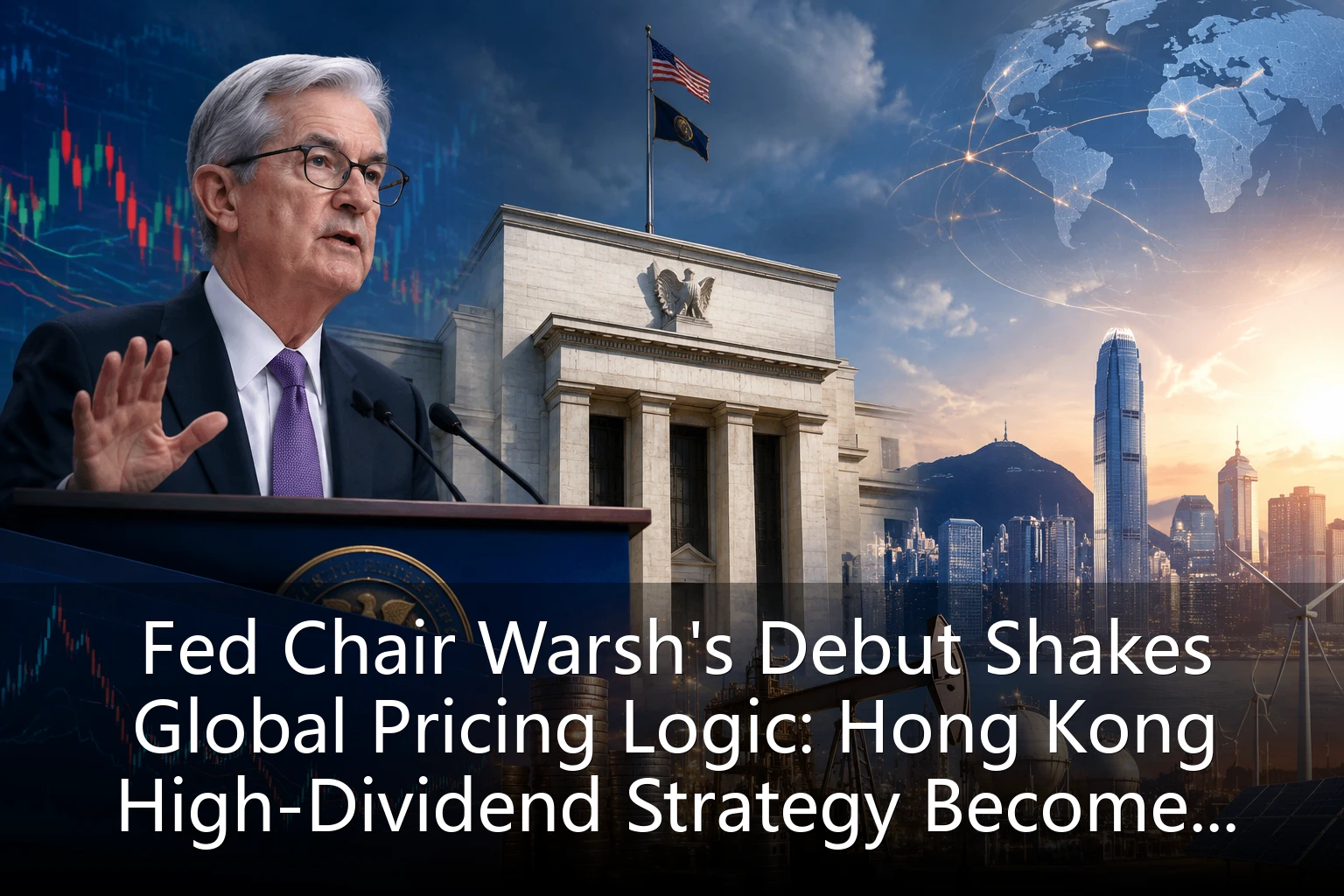
Entering August 2026, global capital markets are focused on the new Fed Chair Warsh across the ocean. His debut speech at the Jackson Hole Economic Symposium not only reshaped the expected path of global dollar liquidity but also triggered a ripple of asset repricing in Asia-Pacific markets. For the Hong Kong stock market, which sits in a valuation trough and is highly sensitive to external liquidity, this policy signal is spawning new structural trends.
Under the dual tone of 'downplaying forward guidance' and 'firmly adhering to the 2% inflation target', global high-risk assets face valuation reassessment pressure. However, the Hong Kong market did not see panic selling; instead, it showed strong resilience amid volatility. Defensive assets centered on high dividends and low valuations are becoming a safe haven for Southbound funds, with energy, utilities, and financial sectors bucking the trend to become the mainstay supporting the Hang Seng Index.
Warsh's Debut Sends Hawkish Signal: Global Risk-Off Sentiment Heats Up
New Fed Chair Warsh stated clearly in his weekend speech that he will abandon the forward guidance tools relied upon in past years, instead depending more on real-time economic data to determine the monetary policy path. He also reiterated the goal of strictly controlling US core inflation at 2%. This stance was interpreted by the market as a strong hawkish signal, meaning the Fed will not easily compromise in the last mile of fighting inflation, and the start of a rate-cutting cycle may be later than previously expected.
This policy tone directly pushed up US Treasury yields and the US Dollar Index, putting global emerging markets under phased capital outflow pressure. Long-duration assets like tech stocks suffered valuation sell-offs due to rising discount rates, with both US and Asia-Pacific stocks experiencing varying degrees of volatility. Against this backdrop of intensified global liquidity expectation games, capital risk appetite rapidly shifted from 'pursuing growth' to 'seeking certainty'.
Hong Kong Stock Live View: Market Shows 'Fire and Ice' Structural Divergence
Affected by external sentiment transmission, the Hong Kong stock market in early August 2026 presented a significant 'fire and ice' pattern. From real-time market data, although the Hang Seng Index dipped under pressure at the opening, it quickly narrowed losses driven by heavyweight blue chips, showing strong support at the bottom. However, the performance of different sectors varied greatly.
On one hand, tech internet sectors and semiconductor chip concept stocks, highly sensitive to liquidity, collectively came under pressure. Due to large prior gains and valuations dependent on long-term cash flow expectations, these sectors faced profit-taking amid rising US Treasury yields. Memory chip and AI computing power concept stocks saw notable pullbacks, dragging down the Hang Seng Tech Index's performance.
On the other hand, high-dividend sectors represented by energy, utilities, and large financial stocks bucked the trend. In a market environment of increasing uncertainty, these 'bond-like' assets with stable cash flows and high dividend features became the targets of capital pursuit. This structural divergence indicates that the Hong Kong stock market is undergoing an internal asset revaluation triggered by a shift in macro liquidity logic.
Southbound Funds Accelerate Rebalancing: High-Dividend Strategy Becomes Defensive Core
Facing global market uncertainty, mainland funds showed strong risk-aversion demand through the Stock Connect channel. Real-time fund flow data since August shows that the net inflow trend of Southbound funds remains unchanged, but its internal allocation structure has undergone significant changes.
Funds are accelerating their withdrawal from high-volatility tech growth stocks and shifting into Hong Kong's high-dividend blue chips. The energy sector, with its dual attributes of high dividends and inflation hedging, has become the top choice for Southbound fund accumulation. Additionally, net buying of traditional defensive sectors like utilities and telecom operators has also increased significantly. This shift in fund flows not only reflects mainland investors' awareness of short-term volatility prevention in the Hong Kong market but also confirms the unique allocation value of the Hong Kong high-dividend strategy in the current macro environment.
Notably, the AH premium index has recently shown some convergence. While the A-share market fluctuated due to macroeconomic data volatility, the H-shares of the same companies in Hong Kong demonstrated strong cost-effectiveness with higher dividend yields and lower valuations. This provides a good entry opportunity for cross-market arbitrage funds and long-term allocation funds.
In-Depth Industry Analysis: Why High-Dividend Assets Win in This Cycle?
From a deeper investment logic perspective, Fed Chair Warsh's 'hawkish debut' has essentially changed the anchoring logic for global capital. In a clear rate-cutting cycle, growth stocks can enjoy the dividend of valuation expansion; but under the expectation of 'higher rates for longer', elevated risk-free rates will severely punish assets lacking current profit support.
- Certainty Premium Highlighted: Against a backdrop of macroeconomic growth uncertainty, companies that can provide stable and high-level cash dividends are given a higher premium for their earnings certainty. The Hong Kong market, home to many traditional industry central and state-owned enterprises, has both the willingness and ability to pay dividends at historically high levels.
- Hedging Against Currency and Inflation Risks: For mainland investors holding RMB assets, allocating to HKD-denominated high-dividend assets through Stock Connect not only yields dividend income higher than domestic wealth management products but also hedges against single-currency risk to some extent.
- Valuation Repair Momentum Building: Despite a prior rally, the Hang Seng Index's overall P/E ratio remains in a global valuation trough. Dividend yields in the high-dividend sector have even reached 7% to 10%, far exceeding the yield on comparable US Treasuries. This attractive spread builds a solid valuation floor for Hong Kong stocks.
Investment Strategy Advice: Grasp Certainty, Position for Defensive Counterattack
Based on the current Hong Kong stock live market and macro liquidity dynamics, investors should adopt a strategy of 'defense as offense, defensive counterattack' in August market operations:
First, in position allocation, it is recommended to overweight high-dividend assets. Focus on selecting energy, financial, and utility leaders with a stable dividend payout ratio above 50% over the past three years and a current dividend yield exceeding 6%. These sectors are not only a safe haven for Southbound funds but also the core force supporting the Hang Seng Index's stabilization.
Second, for tech growth sectors, avoid blindly bottom-fishing. Until the Fed's monetary policy path clearly pivots, the valuation suppression on tech stocks will persist. Investors can patiently wait for core semiconductor and AI application stocks to pull back to reasonable valuation ranges and show fundamental turning point signals before positioning.
Finally, closely monitor AH share premium arbitrage opportunities. For companies dual-listed in A-share and Hong Kong markets, when the AH premium index is high, prioritize allocating to deeply discounted H-shares to capture excess returns from valuation convergence. Also, closely watch subsequent US economic data releases and flexibly adjust positions to navigate market volatility.
Conclusion
The Hong Kong stock market in August 2026 stands at a critical juncture of global macro liquidity expectation reshaping. While Warsh's debut brought short-term pain and volatility, it also accelerated the internal reshuffling and structural optimization of the Hong Kong market. From a 'Hong Kong stock live view' perspective, short-term market fluctuations are not a risk but a touchstone for asset quality. Leveraging the high-dividend strategy as a safe haven, Hong Kong stocks are poised to show greater resilience amid the global liquidity storm, delivering steady returns through the cycle for value-committed investors.