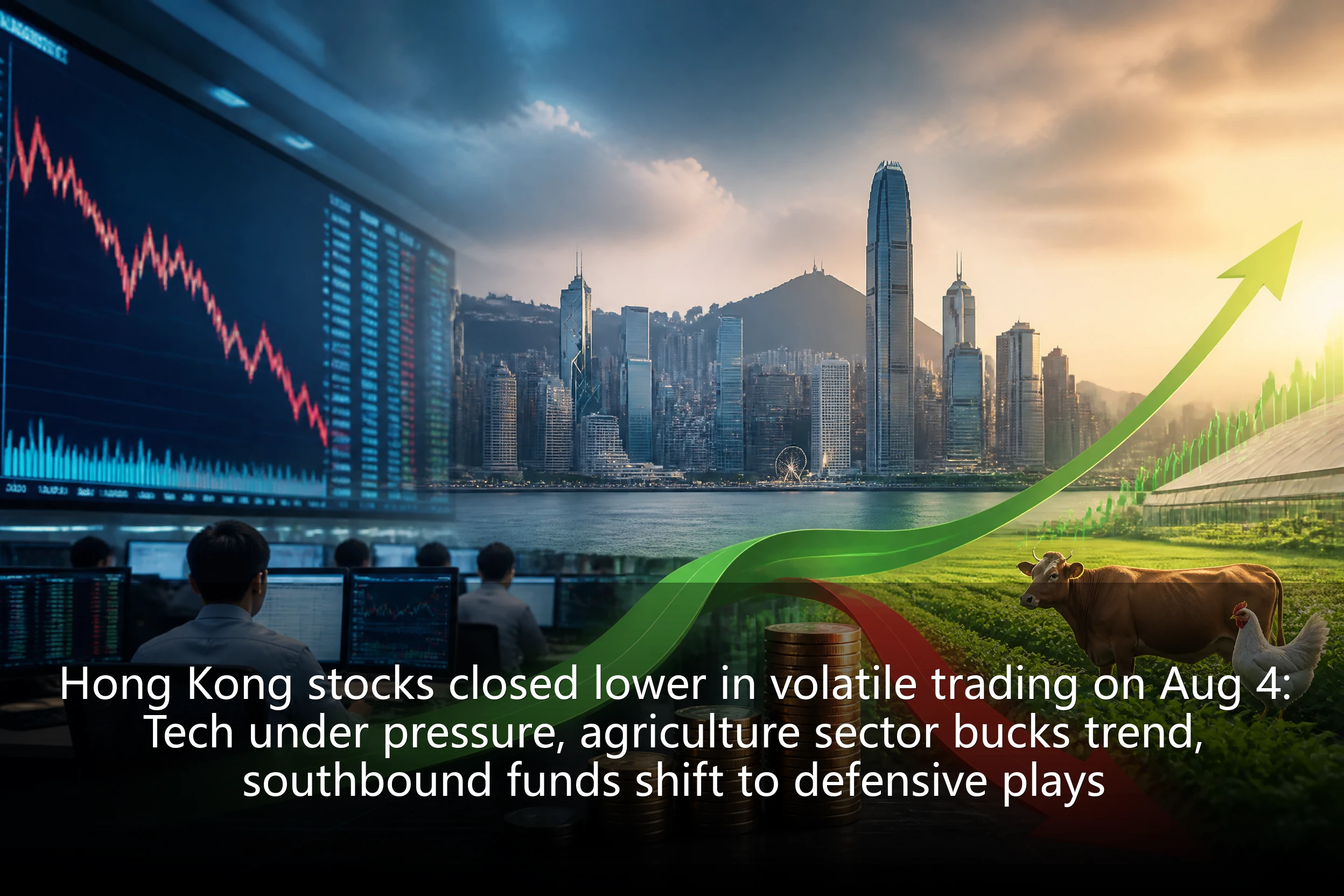
Hong Kong Stocks Diverge on Aug 4: Hang Seng Index Falls, Agriculture Sector Surges Against Trend
On August 4, 2026, the Hong Kong stock market fell back into a volatile pattern after last week's rebound. At the close, the Hang Seng Index fell 0.38% to 21,850 points; the Hang Seng Tech Index dropped more sharply, down 1.2%. Despite broad market pressure, significant structural divergence emerged internally, with agriculture, utilities, and some high-dividend sectors bucking the trend and serving as safe havens for capital today.
Market Review: Tech Stocks Pull Back, Agriculture and Farming Become Highlight
In early trading today, the Hang Seng Index opened slightly lower and briefly attempted to rally, but quickly turned negative under the drag of tech stocks. Affected by overnight profit-taking in US tech stocks and downward revisions to global semiconductor demand expectations, large-cap Hong Kong tech stocks generally declined. Heavyweights such as Tencent Holdings, Alibaba, and Meituan all recorded varying degrees of losses.
However, the other side of the market presented a completely different picture. The Hong Kong agriculture sector experienced a notable surge after 10:30 AM. Among constituents of the Hang Seng Agriculture & Food Index, multiple stocks rose over 5%. Specifically, boosted by the continued rebound in mainland pork prices and heightened expectations for food security policies, livestock breeding and agricultural product processing stocks led the gains strongly. WH Group (00288.HK) saw its intraday gain expand to 4.5%, COFCO Joycome (01610.HK) rose over 6%, and a mid-cap company primarily engaged in feed and hog farming surged over 10% at one point.
This explosion in agriculture stocks was not an isolated event. From a capital perspective, the turnover of Hong Kong's agriculture, forestry, animal husbandry, and fishery sector surged approximately 45% compared to the previous trading day, indicating rapid incremental capital inflows. This 'tech down, agriculture up' seesaw effect reflects that, against the backdrop of current macro uncertainty, capital is migrating from high-beta growth stocks to agriculture stocks with defensive attributes and positioned at cyclical bottoms.
In-Depth Capital Flow Analysis: Southbound Funds Shift to Defensive and Value Plays
Today's Hong Kong capital flow data is highly directional. The Shanghai-Hong Kong and Shenzhen-Hong Kong Stock Connect (Southbound) recorded a total net inflow of approximately HK$3.5 billion today. While the total amount was decent, the internal structure underwent significant changes.
According to Hong Kong capital flow monitoring data, previously sought-after Hong Kong Stock Connect technology stocks experienced notable profit-taking, with clear signs of net selling. Instead, funds poured heavily into high-dividend sectors such as agriculture, energy, and telecommunications. Specifically for the agriculture sector, the Shanghai and Shenzhen Stock Connect seats recorded a combined net purchase of agriculture and farming-related targets exceeding HK$800 million today, a new single-day net inflow high in nearly three months.
Behind this capital flow shift lies a threefold logic:
- Declining Risk Appetite: With increasing volatility in external markets and uncertainty over the Fed's future policy path, investors tend to reduce portfolio volatility. The agriculture sector is favored for its counter-cyclical nature as a consumer staple.
- Agricultural Cycle Reversal Expectations: Extreme weather events have recently occurred in many parts of the world, coupled with strengthening signals of a bottoming hog cycle. The market expects agricultural product prices to enter an upward channel, directly boosting the earnings outlook and valuation appeal of agriculture stocks.
- Policy Drivers: Market rumors suggest that the mainland will introduce a new round of supportive policies for agricultural and rural modernization, providing an additional catalyst for the Hong Kong agriculture sector.
Agriculture Sector Valuation Analysis: The Allure of Low Valuation and High Growth
From a valuation perspective, the overall price-to-earnings (PE) ratio of the Hong Kong agriculture sector remains at a historical low, with an average PE of less than 12 times, far below the approximately 25 times valuation level of the Hang Seng Tech Index. The price-to-book (PB) ratios of some leading agriculture stocks are even below 1 time, offering a very high margin of safety.
Analysts point out that the Hong Kong agriculture sector has long been undervalued by the market due to a 'lack of imagination,' but against the backdrop of rising global inflation and increasing emphasis on food security, agricultural assets are undergoing a value re-rating. Today's sector divergence is not just short-term speculative trading, but also part of a left-side positioning by some long-term allocation funds based on expectations of fundamental improvement. For investors, focusing on Hong Kong agriculture leading stocks and related agriculture, forestry, animal husbandry and fishery ETFs may be a sound defensive strategy for navigating the current volatile market.
Market Outlook: Short-Term Volatility to Continue, Structural Opportunities Remain the Main Theme
Looking ahead, as external market sentiment has not yet stabilized and Hong Kong stocks face the test of the earnings season, the Hang Seng Index is likely to maintain a volatile consolidation trend in the short term. However, as today's market action shows, the risk of a full-blown bear market is relatively low, and structural opportunities remain abundant. Investors should pay attention to changes in Hong Kong capital flows, shifting from blindly chasing tech stocks to exploring sectors with earnings support and reasonable valuations, such as agriculture and high-dividend plays. In particular, close attention should be paid to the Hong Kong agriculture, forestry, animal husbandry and fishery market and specific agriculture stock trends, as this could be one of the main sources of excess returns in the Hong Kong stock market in the second half of the year.