Memory Chip Giant Lands on Nasdaq: SK Hynix $26.5B IPO Rewrites Global Semiconductor Capital Map
Keywords: SK Hynix; Nasdaq Listing; AI Memory; HBM Chip; Global Semiconductor Landscape; $26.5B IPO
Introduction
July 10, 2026, was a milestone day for the global semiconductor industry. Korean memory chip giant SK Hynix officially listed on the Nasdaq with a fundraising size of $26.5 billion, breaking the record for the largest US IPO set by Alibaba in 2014. The company, headquartered in Icheon, South Korea, attracted enthusiastic global capital with its absolute leadership in AI memory—especially high bandwidth memory (HBM). On its debut, SK Hynix shares saw double-digit gains, pushing its market cap to $1.22 trillion. This is not just a revaluation of one company but a collective bet by the market on the memory chip track driven by AI.
I. Record-Breaking IPO: Capital Leap from Asia to Global
SK Hynix landed on Nasdaq in the form of American depositary receipts (ADRs) under the ticker "SKHYV." The IPO price was set at $149 per share, corresponding to a company valuation of about $1.08 trillion. After opening, the stock quickly rose to $170, a gain of about 14.1%, and briefly touched $177, expanding gains to 18.8%. It eventually closed at $168.01, up about 12.8% on the day, bringing the company's market cap to $1.22 trillion.

This IPO, with a size of $26.5 billion, not only surpassed Alibaba's $25 billion US listing record in 2014 but also made it the third largest tech IPO in US history after Alibaba (2014) and Facebook/Meta (2012). For a non-US memory chip company to achieve such results on Nasdaq fully reflects international investors' high recognition of its technology strength, industry position, and future growth potential.
SK Hynix's choice to list in the US has deep strategic considerations. On one hand, the US capital market has a more mature valuation system for semiconductor, especially AI-related companies, providing sustained funding support for memory chip firms with high R&D and capital expenditure. On the other hand, Nasdaq's global platform helps SK Hynix enhance its global brand presence and facilitate expansion of clients and partners in North America and Europe.
II. The "Super Cycle" of AI Memory Track: Why HBM Chips Are Key
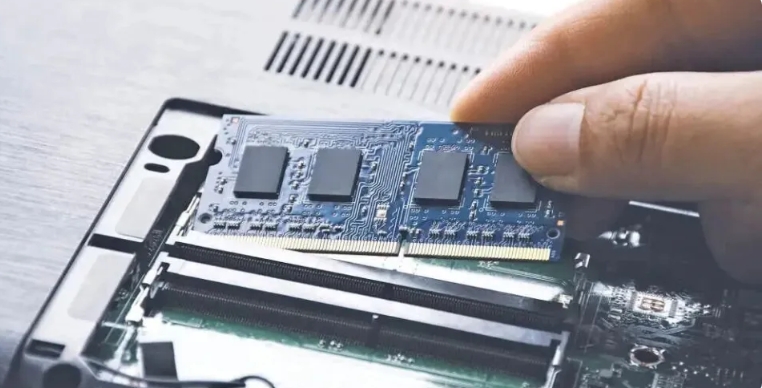
The reason SK Hynix attracted such massive capital lies in its nearly unassailable competitive moat in AI memory—especially HBM. With the explosive growth of generative AI models like ChatGPT, the demand for computing power and memory bandwidth in training and inference processes is increasing exponentially. Traditional DRAM cannot meet the data interaction needs between GPUs and CPUs, while HBM, with its high bandwidth, low power consumption, and small size, has become the "standard" memory solution for AI chips.
SK Hynix was the first to mass-produce HBM2E and is the technology leader in HBM3 and HBM3E. Currently, its HBM products are deeply tied to leading AI chip companies like NVIDIA and AMD, becoming an indispensable component for high-performance GPUs. According to market research data, SK Hynix holds over 50% of the HBM market, ranking first. This technology leadership has directly led to explosive earnings growth: in fiscal year 2025, SK Hynix's revenue exceeded $70 billion, net profit over $18 billion, with HBM products contributing over 40% of revenue.
The strong performance on debut is exactly the market pricing of this AI memory "super cycle." Investors believe that as AI penetrates from the cloud to edge and end devices, and as large model parameter sizes continue to expand, demand for HBM will maintain high growth of over 30% annually for the next 3-5 years. SK Hynix, as the leader on this track, will fully enjoy this structural dividend.
III. Reshaping Global Semiconductor Landscape: A New Paradigm for Korean Companies "Going Global"
SK Hynix's successful IPO also reflects profound changes in the global semiconductor industry landscape. For a long time, South Korea has nurtured two memory chip giants—Samsung Electronics and SK Hynix—which collectively dominate the DRAM and NAND Flash markets. However, with increasing geopolitical risks and rising supply chain security demands, the international expansion of Korean semiconductor companies has become more important.
Listing in the US is not only a capital-level "going global" but also a comprehensive upgrade of brand, customer ecosystem, and compliance systems. By landing on Nasdaq, SK Hynix can more easily access long-term capital from US pension funds and mutual funds, while attracting global tech funds as shareholders. These investors have strict ESG and information disclosure standards, which in turn push SK Hynix to improve its corporate governance to meet international mainstream compliance requirements.
Moreover, this IPO is an important achievement of the Korean government's "semiconductor global strategy." In recent years, the Korean government has strongly supported domestic semiconductor companies to build factories and set up R&D centers in the US and Europe, while encouraging them to use international capital markets for fundraising. A significant portion of SK Hynix's proceeds will be used for advanced packaging and HBM production lines in North America, to better serve core clients like NVIDIA and AMD and reduce transportation costs and geopolitical interference risks.
IV. Post-IPO Challenges and Opportunities: Can It Hold the Trillion-Dollar Market Cap?
Despite the stunning debut, SK Hynix's future is not without obstacles. First, the memory chip industry has strong cyclicality. Even with strong AI memory demand, the supply-demand cycle of DRAM and NAND Flash will still fluctuate. If global economic growth slows or AI capital expenditure undergoes a phased contraction, SK Hynix's earnings could be affected. Second, competition is intensifying. Samsung Electronics is catching up on HBM technology and has launched its fifth-generation HBM3E product; Micron also plans to mass-produce HBM4 by 2026. Market share competition will become more intense.
Additionally, geopolitical risks are an unignorable variable. The US-China tech game continues to evolve, and Korea is caught between the two major economies. Its semiconductor companies must deal with export controls, client compliance reviews, and other pressures. As a key node in the global supply chain, SK Hynix must maintain highly flexible strategic responses.
However, from a long-term perspective, the AI memory track's growth is still strong. With the popularization of application scenarios like autonomous driving, robotics, and AI PCs, demand for memory chip capacity and performance will continue to rise. SK Hynix has announced plans to mass-produce HBM4 by 2027 and invest over $200 billion in technology R&D and capacity expansion over the next decade. If it can maintain technology leadership, its trillion-dollar market cap could be just the starting point.
Conclusion
SK Hynix's $26.5 billion IPO on Nasdaq, with a 12.8% first-day gain, announced the capital carnival of the AI memory era. This is not only a success for one company but a landmark event signaling the global semiconductor industry's shift from traditional cycles to the AI-driven era. For investors, betting on SK Hynix is essentially betting on the continued expansion of AI infrastructure; for industry players, this event indicates that Korean semiconductor companies are integrating into the global capital and innovation system with a more open posture. In the future, every price fluctuation of the ticker SKHYV on Nasdaq will become an important barometer for the temperature of the AI memory industry.
Today, as the AI wave surges, memory chips are no longer silent "data warehouses" but the "golden veins" determining computing efficiency. SK Hynix's successful landing on Nasdaq is like opening the door to this data factory. History records show: over a decade after Alibaba set its record, AI is creating new "giants," and this time, the protagonist on stage is from the semiconductor world.