Helens Trademark Invalid & Sales Decline: Single-Store Revenue Pressure
Have you been to Helen's? The Chinese bar known as 'the first bistro for young people' recently lost its Chinese name. Three Chinese trademarks—'Helens', 'Helens Bar', and 'Helens Big Pai Dang'—were ruled invalid by the final court judgment.
Founded in 2009, the first Helens bar opened in Wudaokou, Beijing. Founder Xu Bingzhong said the early business targeted foreigners, including overseas Chinese students. Perhaps for this reason, Helens initially used English trademarks like 'Helen's' and applied for a batch of related English trademarks in 2013, but its core Chinese trademarks were not registered until 2018.
According to Interface News, the trademark dispute was mainly between Chengdu Helen Binfen Hotel Co., Ltd. and Helens. The former registered two 'Helen' trademarks in 2016 for Class 43 restaurant and bar services, and filed invalidation requests against the 'Helens' trademark on May 23, 2023, and against 'Helens Bar' and 'Helens Big Pai Dang' on August 7, 2024, claiming they were similar to the cited 'Helen' marks and likely to cause confusion.
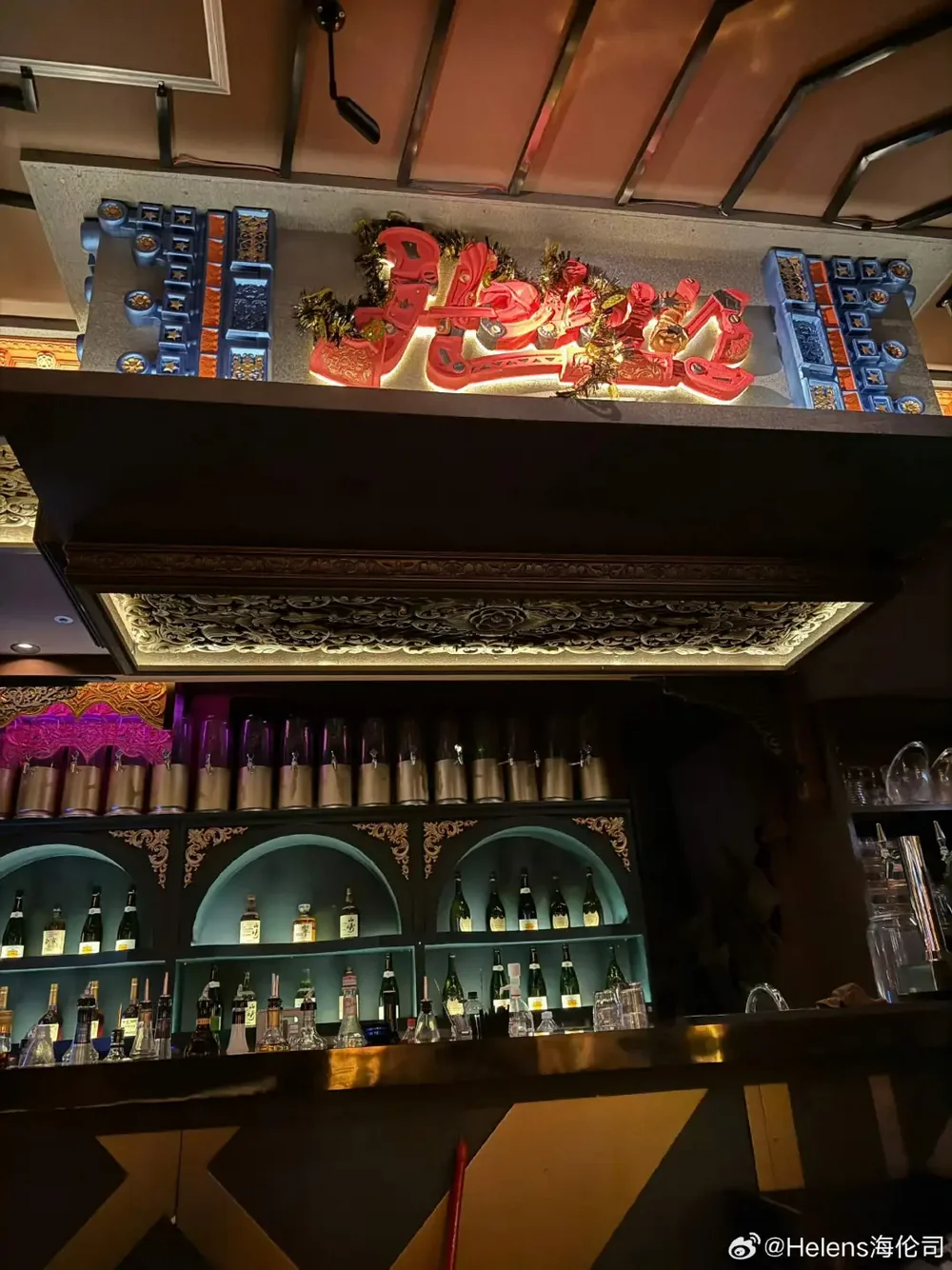
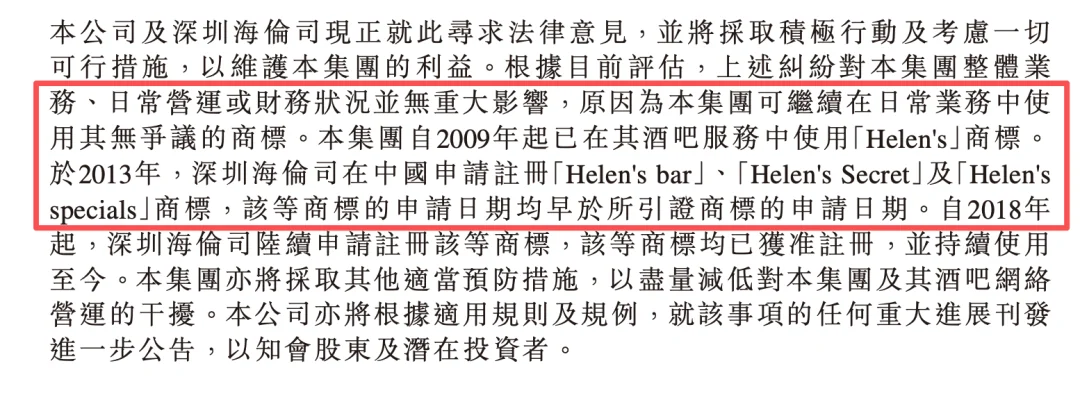
After a three-year legal battle, on the evening of June 25, Helens announced that its three Chinese trademarks had been ruled invalid by the final court judgment. The announcement stated that based on current assessment, the dispute has no significant impact on the group's overall business, daily operations, or financial position, and the group can continue to use its uncontested trademarks in daily business.
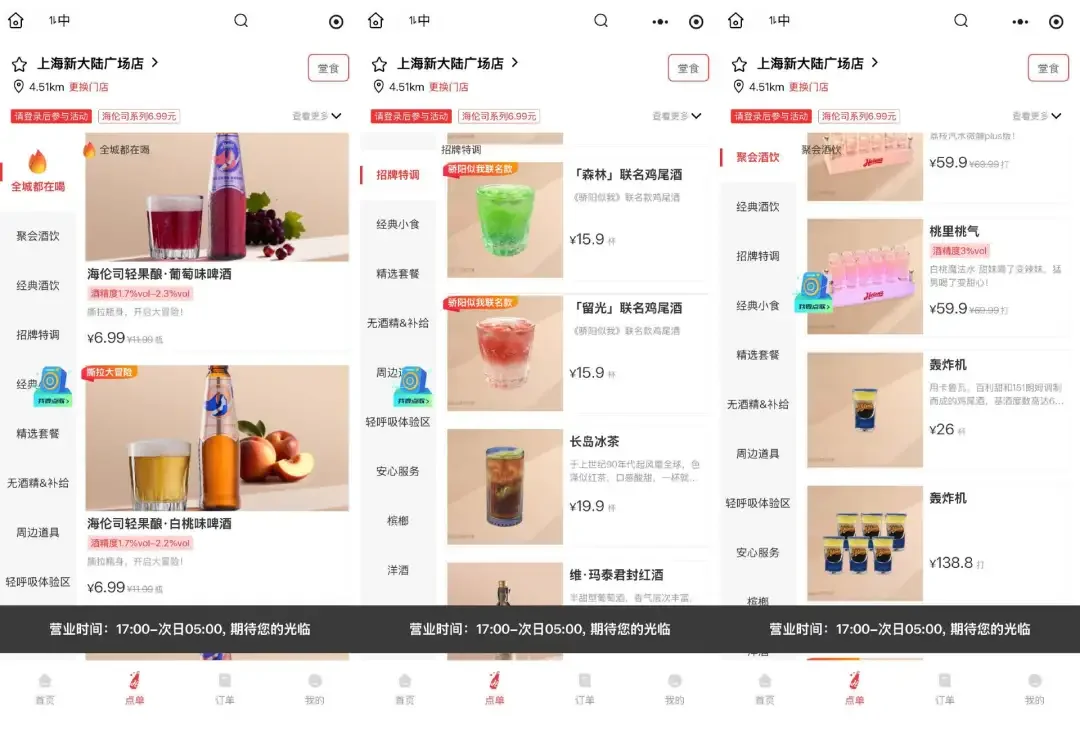
A Blue Whale News reporter found that as of now, offline stores and online promotions still use the Chinese name 'Helens' and related terms. The impact has not yet affected specific stores, but capital markets are more sensitive.
After the news, shares opened lower on June 26, dropping over 6% intraday. At market close, Helens shares fell to HK$1.58. Helens' market cap once reached HK$30 billion in the year of listing, now just HK$2 billion, a drop of over 90%.
From 'First Bistro for Young People' to Not So Young
The earliest Helens stores were located in university areas, mainly serving foreigners and international students. Founder Xu Bingzhong later shifted the positioning to 'a free communication space for young people' and emphasized 'extreme cost-effectiveness.' Helens' bottled beers are priced under 10 yuan, cocktails slightly more, around 20 yuan.
The model of 'young people + cost-effectiveness' was replicated. According to public information, by end-2021, Helens had 782 stores and listed on the HK stock market that year.
According to Helens' 2021 IPO prospectus, revenue from 2018 to 2020 was 115 million yuan, 565 million yuan, and 818 million yuan respectively; net profit was 9.73 million yuan, 79.14 million yuan, and 70.07 million yuan. The prospectus showed that self-owned drinks with a gross margin above 70% contributed over 60% of drink revenue. Thanks to factory direct sourcing and economies of scale, Helens also obtained relatively favorable purchase prices for third-party brand drinks.
One of Helens' strengths was scale expansion, but it also brought soaring store costs. Compounded by the pandemic, Helens posted a net loss of 230 million yuan in 2021; the loss widened to 1.601 billion yuan the following year. After cumulative losses of over 1.8 billion yuan, Helens began closing stores. As of end-2023, Helens had 479 stores, a decrease of 288 from the peak of over 850, a decline of more than 40%.
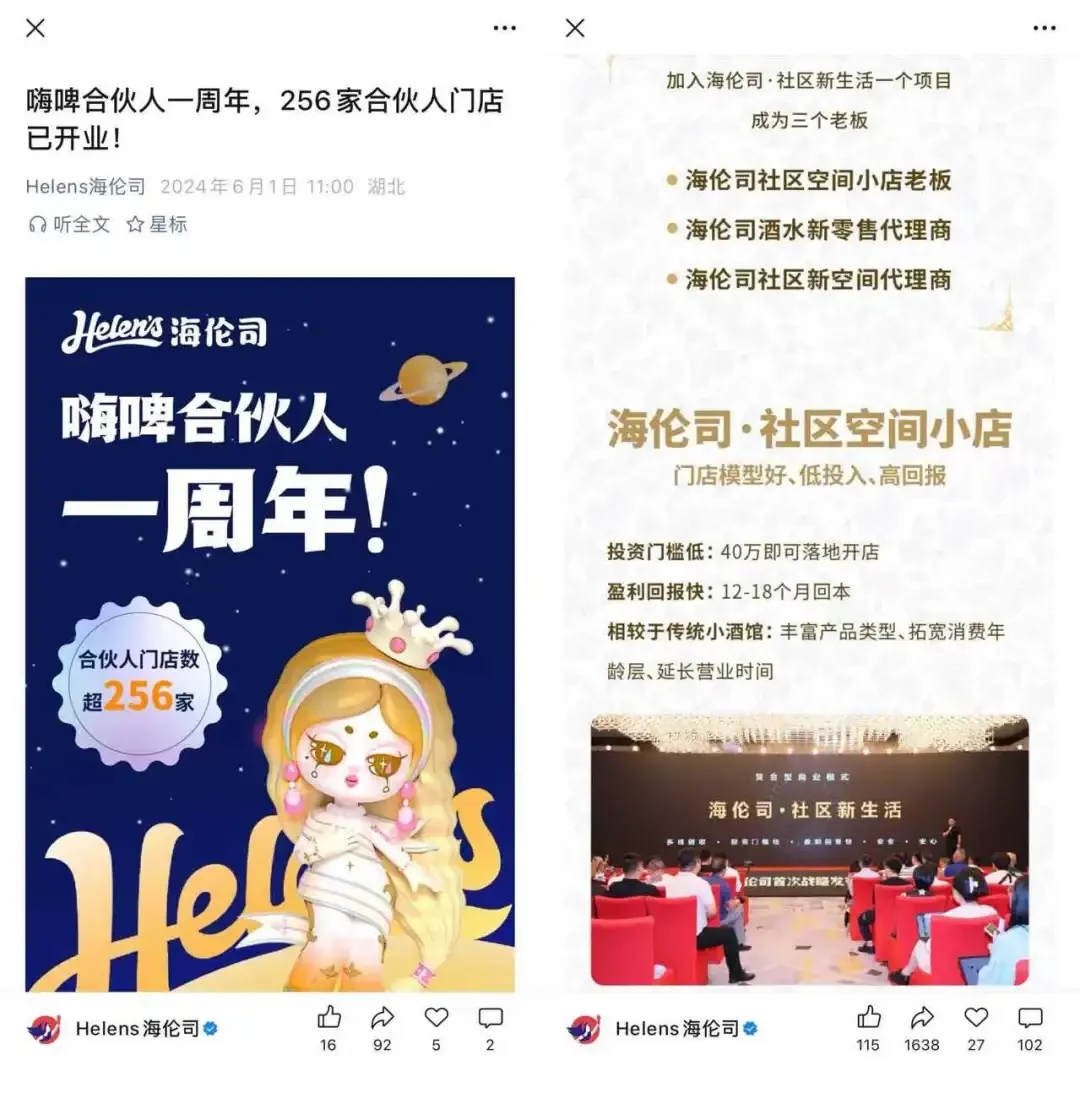
Meanwhile, Helens initiated a strategic transformation from a wholly-owned direct store model to franchising, the 'Hi Beer Partner' program. Initially, the minimum investment threshold was 600,000 yuan; by 2024, it was lowered to around 400,000 yuan.
Proliferation of Bistros, Declining Average Store Sales, and Industry Divergence
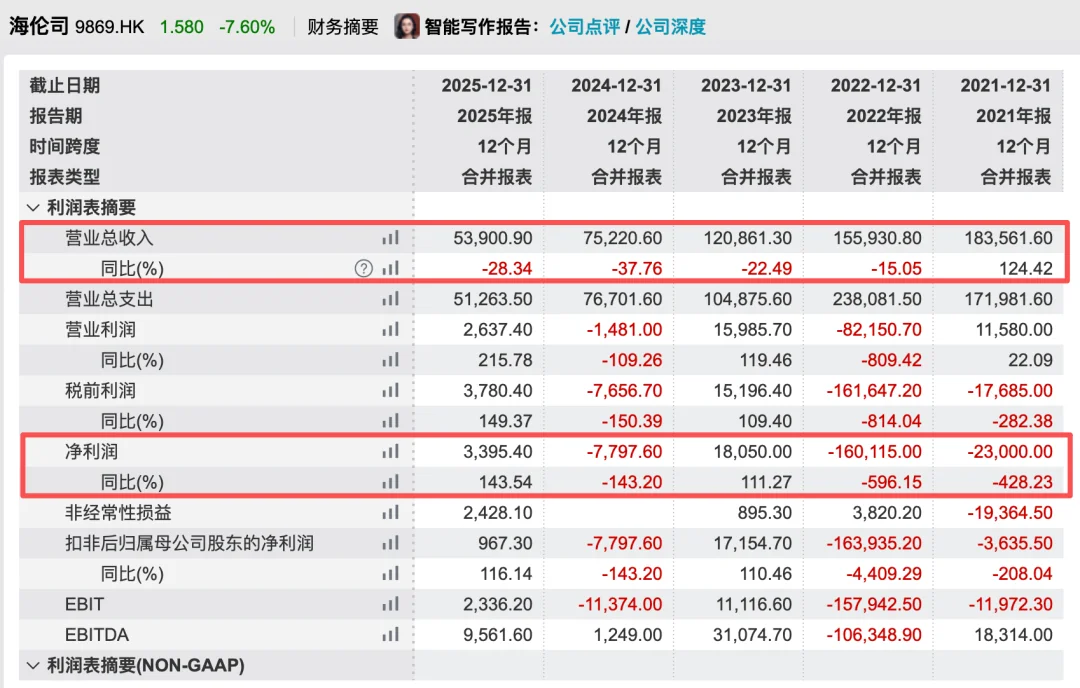
According to Helens' 2025 annual report, full-year revenue was 540 million yuan, down 28.3%; net profit attributable to parent was 33.95 million yuan, reversing to profit. Self-owned drink revenue share and gross margin improved year-on-year, with store-level contribution gross margin rising to 73.77%, indicating improvement over the previous year.
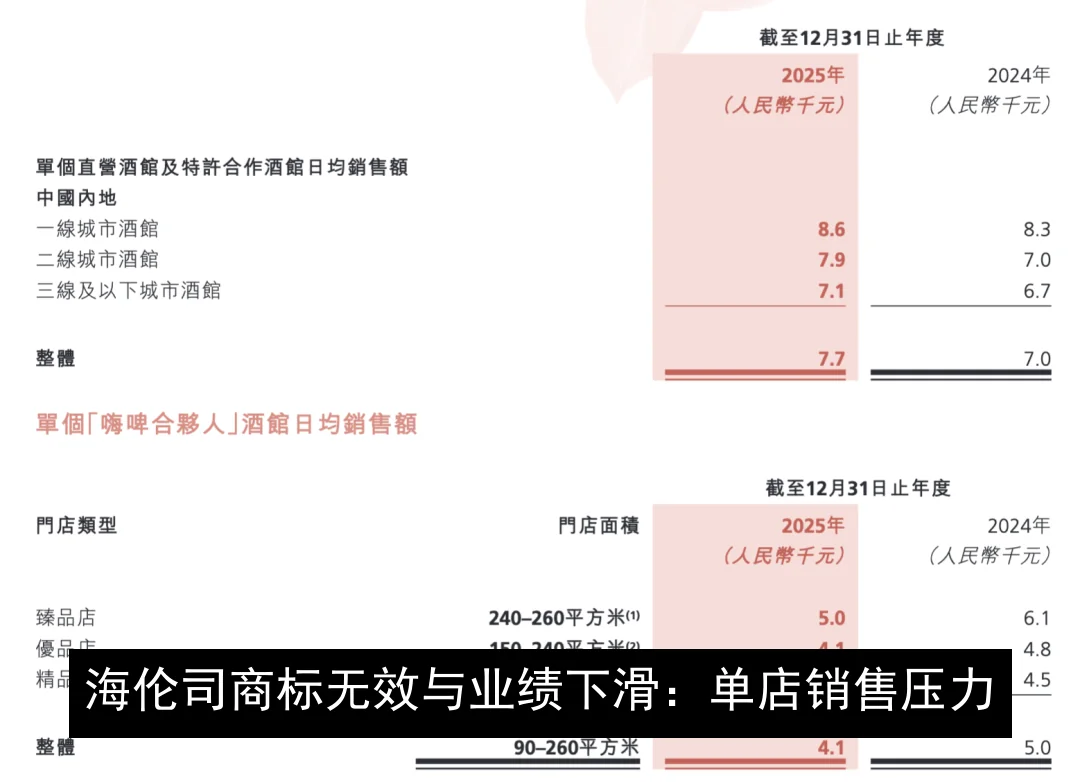
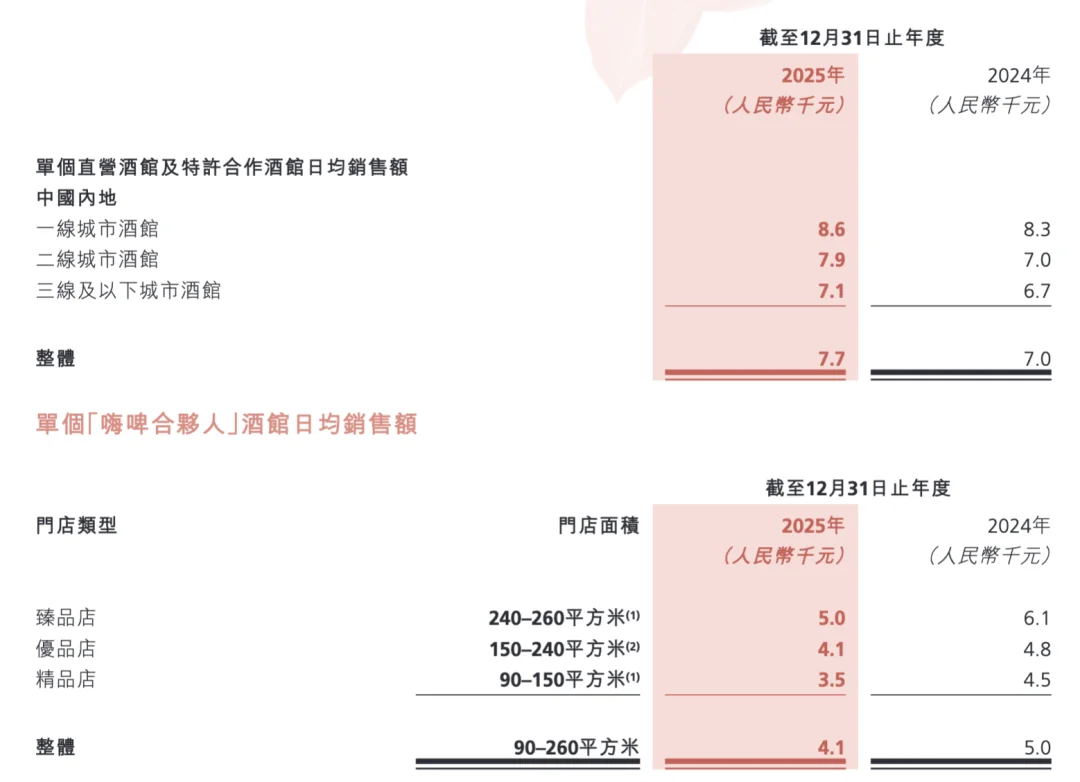
But Helens still faces declining average daily sales per store. In 2025, same-store average daily sales per store for directly-operated and franchise stores were 8,500 yuan, down over 18% year-on-year; average daily sales for individual partner stores were only 4,100 yuan, with all store types seeing declines. In the food and beverage industry where daily revenue per store can easily exceed 10,000 yuan, the main franchise stores earn less; additionally, nearly 70% of Helens stores are in third-tier and lower cities, putting pressure on profitability.
On the other hand, young people today have more choices for drinking and socializing, and low prices are becoming less attractive. According to the Narrow Door Restaurant Index, over 38,000 new bars opened in the past year. From home bars, craft beer pubs, livehouse-style bars to various bistros, consumption scenarios are diversifying.
Among them, the 'food + drink' bistro concept has risen strongly. The operator of the fast-growing Huan Shi brand, Jiwu Siwei, filed a prospectus with the HKSE in January this year. Huan Shi currently has over 100 stores in China, and its parent company's revenue exceeded 1 billion yuan in 2024. Unlike Helens, which focuses on low prices and scale, Huan Shi takes a different path: more atmospheric environments, higher product pricing, and per capita spending of over 100 yuan.
Huan Shi extends operating hours to over 18 hours by offering brunch, afternoon tea, dinner, and nighttime drinks market, enhancing store efficiency and profitability. The prospectus disclosed that in the first nine months of 2025, average daily sales per store were 29,880 yuan; for the nine months ended September 30, 2025, beverages and alcohol contributed about 45% of revenue, of which 85% were alcoholic drinks; overall gross margin remained stable at 68.7%, above industry average.
However, Huan Shi also faces high store costs and possible brand reputation impact from consumer complaints about food taste and quality.
Chinese food industry analyst Zhu Danpeng believes that like the coffee sector, low, mid, and high-end brands all have markets. For bars, different pricing tiers will coexist. As the bar format gains popularity among the younger generation, the industry is in a period of rapid expansion but with low overall concentration. After about five more years, with capital support and consumption dividends, the market may see leading brands and a clearer competitive landscape.
Zhu also pointed out that product pricing is not the only key factor. Hard factors determining the future of bar businesses include brand effect, scale effect, fan effect, supply chain completeness, and single-store operation capability. Because each store is in a different location, strategies need to be differentiated. For Helens, how to run every single store well might be the biggest challenge.