


HK Stock Liquidity Relief Window Opens: Opportunities and Risks Coexist
Keywords: HK Stock Market, Liquidity, Lock-up Expiry, Overseas Liquidity, Strategy Analysis
Introduction
Recently, the Hong Kong stock market has shown an oscillating pattern amid multiple interwoven factors. While investors focus on corporate fundamentals, they are particularly sensitive to liquidity dynamics. A latest report from Guotai Haitong Chief Strategist Fang Yi brings a glimmer of hope: from mid-July to mid-September, HK stock micro liquidity is expected to usher in a rare relief window. This judgment is based on the IPO off-season, fading peak of lock-up expiries, and rising possibility of correction in overseas rate hike expectations. However, Fang Yi also points out three risks in overseas liquidity that require vigilance. This article deeply analyzes the logic behind this judgment and provides forward-looking reference for investors.
Three Supports for the Relief Window
IPO Off-Season and Fading Lock-Up Expiry Peak
The liquidity pressure in the HK stock market mainly comes from IPOs and lock-up share expiries. Fang Yi points out that HK IPOs will enter an off-season, lasting until the end of September. Historical data shows that from July to September each year, the pace of corporate listings usually slows, significantly reducing the diversion of market funds from the issuance side. Meanwhile, the lock-up expiry peak in early July has passed; although there are still large-scale expiries of over HK$30 billion in the future, overall pressure has decreased markedly compared to earlier periods. This contraction in the "supply side" provides breathing room for market liquidity.
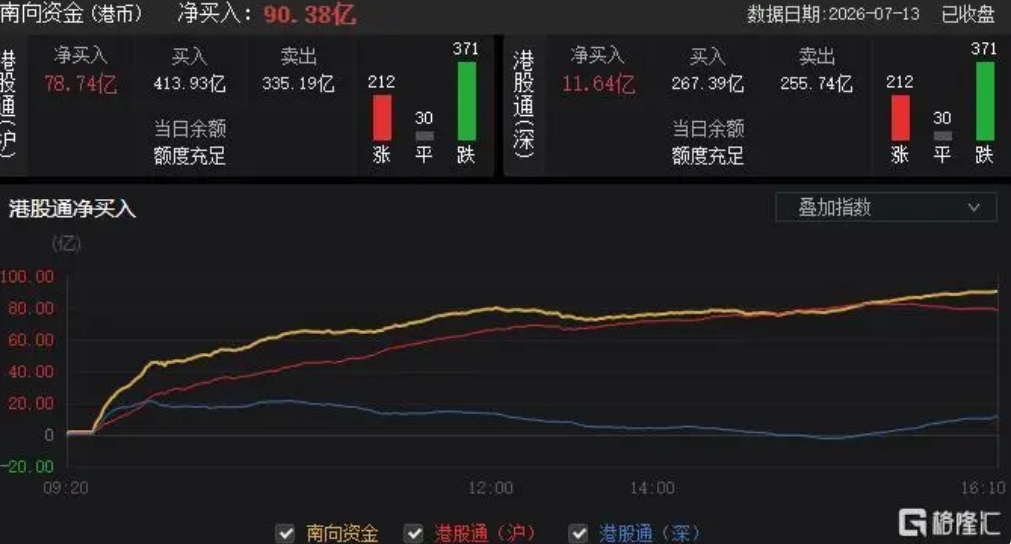
The above chart shows recent HK stock market fluctuations, with liquidity tightness directly reflected in index movements. As expiry pressure eases, the market may gain phased support.
Rising Possibility of Correction in Overseas Rate Hike Expectations
Fed monetary policy is always the core variable affecting HK stock liquidity. Fang Yi believes the possibility of correction in overseas rate hike expectations is rising. This is based on two points: on one hand, US economic data shows divergence; inflation has some resilience but the job market has cooled somewhat; on the other hand, market discussion about a Fed rate cut this year is heating up again. If rate hike expectations are revised downward, the US dollar index may weaken, reducing pressure on the Hong Kong dollar and potentially attracting capital back to HK stocks. This improvement in the external environment, resonating with internal liquidity relief, may bring phased opportunities for HK stocks.
Overseas Risks Not to Be Ignored
Although the relief window is worth looking forward to, Fang Yi also clearly identifies three overseas risks that could hit the fragile balance at any time.
US Dollar Index Could Strengthen Beyond Expectations
The US dollar index is the "baton" of global liquidity. If US economic data continues to surprise on the upside, or geopolitical tensions boost risk aversion, the dollar may strengthen again. A strong dollar will lead to capital outflows from emerging markets, and HK stocks cannot escape unscathed. Especially sectors linked to the dollar (like exports, tech stocks) will come under pressure. Investors need to closely monitor key US data like CPI, non-farm payrolls, and hawkish comments from Fed officials.
HKD Could Touch Weak-Side Convertibility Undertaking
The Hong Kong dollar adopts a linked exchange rate system, strictly maintained within 7.75-7.85. If the HKD touches the weak-side convertibility undertaking at 7.85, the HKMA will be forced to intervene, selling USD and buying HKD, thereby withdrawing market liquidity. Fang Yi warns that such liquidity tightening could trigger a chain reaction, leading to higher interbank rates and pressure on risk assets. Currently, the HKD is still some distance from the weak-side guarantee, but if the Fed continues tightening, pressure will gradually increase.
US-Iran Conflict Variable Still Exists
Geopolitical risks are unpredictable "black swans." Tensions in US-Iran relations could push up oil prices, exacerbating global inflation and forcing central banks to maintain tightening policies. Fang Yi specifically notes that this variable has not yet been fully reflected in asset pricing. If conflict escalates, HK energy stocks could benefit in the short term, but the overall market will be under pressure due to declining risk appetite. Investors need to preserve some safety margin for such tail risks.
Implications and Strategies for Investors
Seize the Window, Optimize Position Structure
The relief window from late July to mid-September offers investors an opportunity to rebalance. Recommended allocations include: first, growth stocks benefiting from declining rate expectations, especially internet and biotech sectors; second, defensive targets with stable cash flow and high dividend yield, such as utilities and telecom operators; third, scarce HK-specific assets like consumption leaders and new economy companies. At the same time, reduce exposure to tech hardware stocks highly sensitive to USD strength and small-cap stocks with high valuations.
Risk Hedging Is Indispensable
Facing the three overseas liquidity risks, investors should establish hedging mechanisms. Consider allocating to safe-haven assets like gold and US bonds; use options or futures to protect HK stock positions; monitor HKD exchange rate movements and reduce leverage if approaching 7.85 weak-side guarantee. Additionally, under geopolitical risks, diversify holdings across sectors and regions to avoid over-concentration in any single sector.
Conclusion
Overall, the HK stock market does indeed see a rare liquidity relief window from mid-July to mid-September, providing investors with a phased allocation opportunity. However, Fang Yi's analysis warns us that the window is not open indefinitely; overseas risks may resurface at any time. While enjoying short-term dividends, investors must stay clear-headed and prioritize risk control. Future market direction will depend on the combined outcomes of economic data, geopolitics, and policy games. Only by capturing structural opportunities and preparing defensive strategies can one navigate steadily in a volatile market.
